


Machine
As a leading manufacturer in Taiwan & China established form 1978 , HAO HANN enterprise CO.,LTD is a professional company of manufacturing all kind of snap button and fastening machine, such as rings, hooks and buttons. We cooperated with more than 300 oversea distributors, developed two sub-company and occupied over 46000 square meters factory. Until now, our products have received recognition from our valued customer.
High Quality
We have skillful craftsmen, experienced designers, two factories that equipped with press and button machines to ensure qualify products. The quality of every product we produce meets customer requirements. Our company strictly implements quality standardization management, with perfect testing equipment and strict testing methods.
Rich Product Species
Our products include metal & plastic buttons and snap button, various types of rivets, eyelets, buckles, rings, hooks, clips and webbing/cord that mainly for apparel & bag accessories. Also, we produce assorted fastening (attaching) machines catering for different loads of production lines.
Delivery in Time
We can quickly package and send the finished products to you. We have cooperated with international logistics companies such as DHL, UPS, FedEx, and TNT, and can deliver products to all parts of the world on time. And we can deliver packages to all over the world.
Custom Service
We can customize shapes, materials, logo, and styles etc. of our products to meet your various design needs. Our product accept ODM&OEM requirements.
Wide Range of Application
Our product can be widely used in precision machinery, textile equipment, steel furniture, construction hardware, high and low voltage electrical appliances, hardware tools, automobile, motorcycle accessories and other industries.


Introduction of Button Machine
Button sewing machines are a special kind of machine that are used in the clothing industry to sew buttons on. This is why they are also called button-attaching machines. Button attaching machine is used to sew the button in the garment without damaging it. Various types of buttons like a button with two holes, four holes or shank could be sewn on this machine by making simple adjustments.
Different Styles of Buttons and Rivets
For Buttons
Flat Buttons
Their main characteristic is that they have holes in the center of the piece, so you can pass the thread and needle through those holes to sew the button over your fabric. You will find them with either two or four holes. The ones with two holes in them are commonly used on informal or casual clothes or projects such as cardigans and blouses. Four-hole buttons are mostly used in smaller to medium sizes on formal wear garments such as men’s shirts or pants.
Shank Buttons
This has a small loop made of the same material as the button, which is placed on the back of it to be sewn into a garment. Thanks to the shank, these buttons can hold and keep in their place heavier layers of fabrics. Shank buttons come in all sorts of sizes, but they are usually found with four heights of roundness. Flat, quarter, half-shank, and full-shank.
Cloth
A cloth button is made out of two pieces made either of plastic or metal that can hold a little piece of fabric between them when you put them together. This allows you to cover the button to match the fabric of your project. It has a round bubble finish on the top and a shank on the back.
Snap Buttons
This metal or plastic fastener is made out of two pieces that interlock with each other to close a garment or project. It needs a special tool to attach it to the fabric, but you can find the buttons with a kit that includes this tool. Therefore you won’t need to buy it separately. Commonly found on baby’s clothes.
For Rivets
Solid Rivets: The Most Common Rivets
These rivets are the most common types of rivets. They are straightforward, dependable, and the oldest forms of joining materials. These simple tools consist of a solid shaft with a head on a particular side once it is punched in. The headless part on the other end gets deformed using a rivet gun or hammer.
Blind Rivets: Also Named Pop Rivets
Blind rivets are otherwise referred to as hollow or pop rivets. These metal rivets are tubular fasteners with a mandrel through their center. Manufacturers insert blind rivets into drilled holes made in parts intended for joining.
Tubular Rivets: With a Hollow End
They are partially hollow rivets with many different configurations. The generic tubular rivet comes with a manufactured head on one side and a hollow end on the other side. The hollow end sticks through every piece for joining.
Split Rivets: Home Repair Rivets
Also referred to as bifurcated rivets, split rivets are closely related to self-piercing rivets. They are the best options for joining softer materials like leather, plastic, and wood. Split rivets are available with split or sawed bodies and are applicable to home repairs. Also, they have sharp ends or tips that allow them to make holes in the materials themselves. It is not advisable to use them in extreme or critical applications.
Flush Rivets: Also Called Countersink Rivets
Flush rivets, also countersunk rivets are used on external surfaces to ensure a good appearance and eliminate aerodynamic drag. This is due to its use of both countersunk holes and heads. For reduction of drag and turbulence (aerodynamic reasons), flush rivets are functional on the aircraft exterior. There may be a need for more post-installation operations to improve airflow.
Benefits of Using Button Machine

Customization
Print pins and badges that match your company’s logo or image. Multi-size button maker can also allow you to create buttons in every conceivable shape and size, which allows you to customize your products.
Time-Saving
The basic button maker could save you time as it can produce a large number of buttons in one go. This can help you save time and boost your efficiency. It is also important for meeting deadlines. This is crucial for businesses that have customers.
Consistency
The machine ensures that each button is uniform in size and shape, resulting in a professional and consistent look across the upholstery project.
Versatility
An upholstery button machine can be used to create buttons of various sizes and shapes, allowing for greater flexibility in design.
How to Choose a Button Machine
Make Plastic Or Fabric Buttons
When you’re searching for a button maker, you probably already have an idea of what you’re looking for. The first thing to consider is whether you want a plastic button-making machine or one that works with fabric. Are you planning to make pins or buttons that can be sewn onto other projects? Keep in mind that the type of machine you need will depend on whether you want fabric buttons that can be sewn on. It’s important to choose the right machine for your specific needs.
Type Of Backings
Depending on the button maker you choose, there are different backing options available. If you opt for a plastic button maker, you’ll have more choices than just the traditional pin back. I’ve come across various backings like magnets and bottle openers that can be used. So, if you’re interested in creating a variety of items, it’s best to go with a regular button press instead of a fabric one. On the other hand, if your goal is to make buttons that can be sewn on, then a fabric button maker is what you’ll need.
Size Of Buttons
Once you know the types of buttons you’re looking to make, the next step is to decide the size of the buttons you want to make. Typically button makers can only make a single-size button. They typically range from 1-3 inches, but I’ve seen them as small as 7/8″ and as large as 6 inches. Therefore if you know you only need to make one size of buttons you can save some money and get a single-button machine that makes one size.
Shape Of Buttons
Chances are the answer to this question is round. However, some button makers can make different sizes such as squares or rectangles. These are more rare so your options are more limited, but there are options for non-circular shapes.
Budget
There’s quite a range in prices for button-making machines. The more durable ones are made mostly of metal, but they do cost more. On the other hand, there are cheaper options with plastic parts that help keep the costs lower, but they can be a bit finicky.
Introduction of Riveting Machine
A riveting machine is used to automatically set (squeeze) rivets to join materials together. The riveting machine offers greater consistency, productivity, and lower cost when compared to manual riveting. Riveting machines are used in a wide range of applications including brake linings for commercial vehicles, aircraft, locomotives, textile and leather goods, metal brackets, window and door furniture, latches, and even mobile phones. Many materials can be riveted together using riveting machines including delicate and brittle materials, and sensitive electrical or electronic components.
Benefits of Using a Riveting Machine
Lighter and More Resistant
Compared to bolts and screws, aluminum rivets are lighter and more resistant to atmospheric and chemical corrosion, making them a suitable solution for various applications.
Join with Ferrous or Nonferrous Metals
The versatility of rivets allows them to join a wide range of materials, both metallic (e.g., aluminum, copper alloys) and nonmetallic materials (e.g., wood, plastic, asbestos), making them suitable for various applications.
Suitable for Joining Dissimilar Materials
The ability of rivets to join dissimilar materials(joining aluminum and copper plates) makes them a versatile solution for various applications where different materials need to be joined together.
Stronger and More Reliable
It is more durable than other methods in high-vibration and impact-force applications. Riveted joints have proven to be more reliable than other joining methods in applications where the joint is subjected to excessive vibration and impact forces.
Make Joints in Any Location
The flexibility of rivets to be used in any location, including vertical and overhead, makes them a convenient solution for various applications.
Environmentally and User-Friendly
With no fumes or gases produced during production, the production of rivets does not produce fumes or gases, making it an environmentally and user-friendly solution.
High Shear Strength and Good Fatigue Resistance
Rivets possess high shear strength and good fatigue resistance, making them a durable solution for various applications.
Economical Method
With low cost of rivet production, rivets are cheaper to produce than other joining methods, making the use of a riveting machine a cost-effective solution.
Impact Riveting Machine
This type of machine uses a hammering or striking action to join two materials together with a rivet. It delivers a powerful blow to deform the rivet and create a secure joint.
Orbital Riveting Machine
Also known as radial riveting machines, they use a spinning motion combined with axial force to form a rivet. This method is especially suitable for delicate or fragile materials.
Radial (Spiral-form) Riveting Machine
This machine utilizes a rotating die to gradually form the rivet by applying radial force. It offers precise control over the riveting process and is commonly used in automotive and aerospace industries.
Roller-form Riveting Machine
These machines use a rolling action to form the rivet. They typically have multiple rollers that apply continuous pressure to shape the rivet head.
Automatic Drilling and Riveting Machine
This machine combines drilling and riveting functions to automate the assembly process. It can drill holes and insert rivets in a single operation, increasing efficiency.

Introduction of Eyelet Machines
The versatile use of eyelets makes them one of the basic elements of equipment, e.g. in the printing or advertising industry. Although they are perceived mainly through the prism of advertising banner production, the scope of application of eyelets is much wider. It may also include making eyelets in packaging, fabrics, nets, tarpaulins, sails, tents, and uncommon materials. Especially the possibility of automatic feeding of eyelets while maintaining exceptional precision of operation makes eyelet machines gradually used in more and more advanced processes.
Benefits of Eyelet Machines
The machine has presence detectors for both the washer and the eyelet, thus preventing a setting default. Machine failures usually happen when there is a lack of a wrong positioning of the elements, that is why we reduce the risk of damaging the works.
The machine has indicators that warn when eyelets and washers need to be replaced, and also when preventive maintenance is required.
They have protection devices where the eyelet is set and do not work under unsafe conditions. It is a great advantage to avoid unnecessary risks.
This eyelet machine has deposits for eyelets and washers. In the case of washers, it has a double supply raceway so as not to stop the supply at any time.
It is possible to perform different modes of setting according to the needs and material used. For example, we can choose to carry out the setting with a pre-cutting mode or just with eyelets.

Components of Eyelet Machine
Feeding System
This component feeds the eyelets into the machine, ensuring that they are properly positioned for attachment.
Punch
The punch is used to create a hole in the material where the eyelet will be inserted.
Die Set
The die set holds the eyelet in place during the attachment process and helps to shape and secure it to the material.
Press Mechanism
This mechanism applies the necessary force to attach the eyelet to the material, either through manual operation or powered by an electric or pneumatic system.
Control Panel
The control panel allows operators to adjust settings such as eyelet size, pressure, and speed, ensuring optimal performance and results.
Steps Of Sewing On A Button By Machine
Step 1: Choosing Buttons
This method will only work with buttons that have holes all the way through from top to bottom. It will work with either two holes or four; you'll simply sew one pair of holes at a time. It will NOT work on buttons that have a shank.
Step 2: Button Feet
There are actual "button feet" meant specifically for sewing on buttons. They have a small U-shaped base covered in a rubbery material. The shape of the foot allows you to easily see your button, and the rubbery surface helps grip the button so it doesn't go sliding away. You can still do this if you don't have a special foot. Choose a foot that would allow you to do a wide zig-zag stitch and tape or glue a small U-shaped piece of rubber or foam to the bottom. It will be harder to see your button holes to set your stitches, but with a little practice you can do it.
Step 3: Setting up Your Machine
First off, set your machine to sew a zig-zag stitch. Set your stitch length to zero. This should keep your feed dogs from advancing the fabric. However, sometimes the feed dogs will still move up and down in a motion that will bump your button up and down. If this happens, turn your feed dogs off. Every machine is different, but generally there's a switch at the back of the machine that will do this. lace your fabric and button so that the two holes you are going to sew through are centered in the foot directly below your needle.
Step 4: Sew Your Button
Once the needle clears the holes on either side you're ready to go. Step on the pedal and let the machine make about ten back and forth stitches. Don't let it make too many stitches; you want just enough to hold the button on firmly. This particular button is just going to be decorative, but if you were sewing a button that was intended to be functional I might want a little bit of space between the button and the fabric. In that case, I'd make a little U-shaped spacer out of cardboard and slide it between the button and fabric before sewing to create that space.
Step 5: Tie off Threads
Once your button is sewn on you'll want to make sure it STAYS on. Pull all of the loose threads to the back of your fabric and tie them off so your button doesn't come loose. If you're having trouble getting your threads to the back, pass them through the eye of a sewing needle and push the needle through to the back.
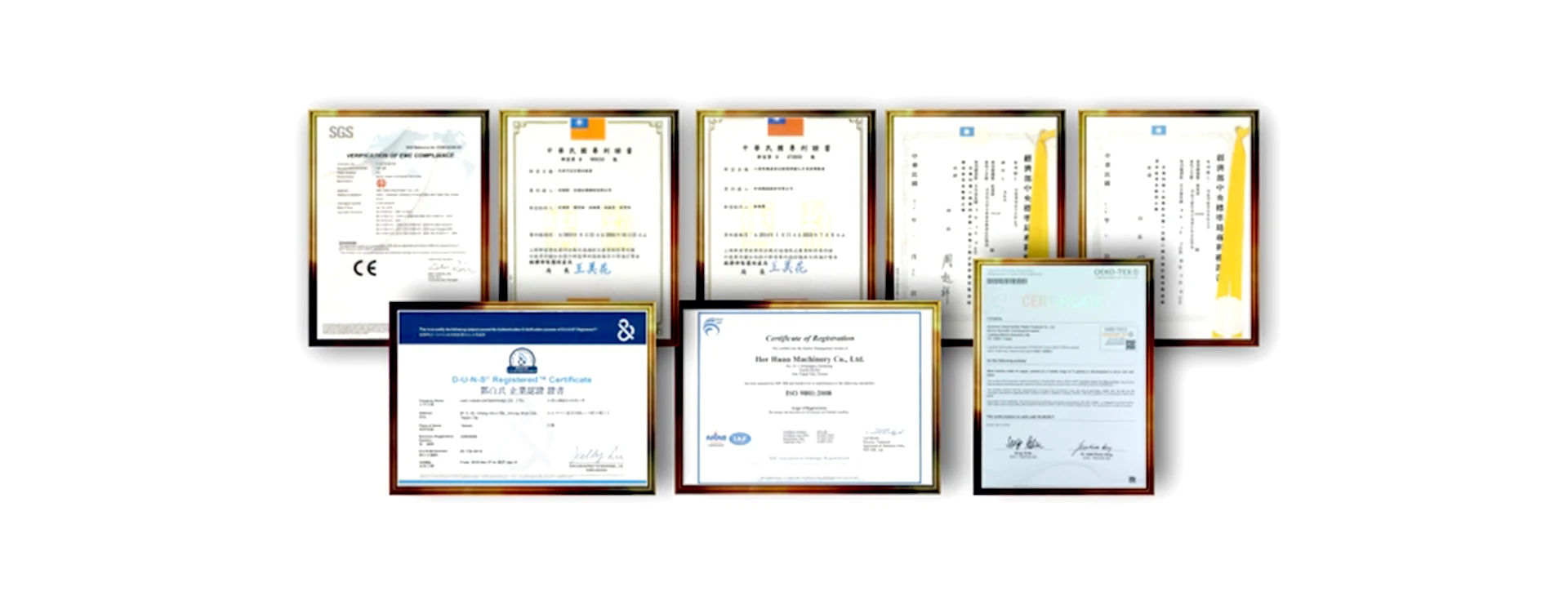
Our Certificate
Our Factory

